Tuesday, September 11, 2018

Video Game Review #150: Metal Gear Solid 3: Snake Eater

Metal Gear Solid 3: Snake Eater
PlayStation 2


Nostalgia Factor:

Dating back to the original game’s release back in September of 1998, I have always been a huge fan of the Metal Gear Solid series. I avidly devoured both the original game and its sequel – Metal Gear Solid 2: Sons of Liberty. It should come as no surprise that I was super excited to play Metal Gear 3 Solid: Snake Eater when it first came out. While most critics out there hail this game as one of the best, if not THE best game in the series, I have always been completely neutral on it. I don’t hate it, but it has never been one of my favorites either.

I’ve always been someone who wants to see answers. Certainly, Metal Gear Solid 2 raised more questions than it ever answered. I think one of the reasons I didn’t like Snake Eater as much when I first played it is because I was hoping for a direct sequel to MGS2. Going backwards with a prequel, when there was still SO much plot left out there to explore, was super irritating to me. I wanted to know more about the events that took place after the end of the second game, like what happened to Ocelot. I didn’t care about what happened 30 years ago. This game didn’t even have the “real” Solid snake in it. What the heck?

It didn't help that this game came out in back in 2004, AKA the perma-drunk/stoned portion of my life when I was living with my ex-girlfriend Jessica. I probably didn’t even know what the hell was going on half the time as I played this. My most vivid memory of the game from back then is the part where I had to face off with The Sorrow. For the life of me, I absolutely could not figure out what to do, and I kept dying over and over again, to the point where I thought my copy of the game was broken. A simple Google search nowadays would reveal what I needed to do in about four seconds. In 2004 or 2005, however, the internet was not as easily accessible. We certainly didn’t have it in our apartment. I ended up discreetly opening the plastic packaging of a Snake Eater strategy guide in GameStop, and looking to see what I needed to do. Then I put the guide back on the shelf and scurried out with a guilty look on my face. And you know what? I have no regrets about that.

Overall, my initial impression of Snake Eater was a middling one. As a game I enjoyed it, for the most part. As a Metal Gear Solid game, I was very disappointed.

In the years since, I have played this game from start to finish a small handful of times. My overall impression of it HAS improved over the years, but before my most recent replay I still considered it the worst out of the main entries in the series that I have played. Would playing it in 2018 change my opinion? Read on to find out.


Storyline:

The storyline for this game is actually quite simple when you stack it up against other games in the series. 30 years before the events of the first Metal Gear Solid game, Snake is sent into the forests of the USSR to rescue a brilliant nuclear weapons engineer named Sokolov, who wishes to defect from the Soviet Union. During the rescue mission, Snake's superior officer, referred to as The Boss, teams up with rogue supervillain Colonel Volgin. They nab Sokolov for their own nefarious purposes and use the Shagohod (an early Metal Gear prototype) to wipe out his old base. Snake is attacked and left for dead during the mutiny. He recovers, however, and it becomes his mission to track down and kill Volgin and The Boss, and to get Sokolov back and destroy the Shagohod.

When I first played this game, I had no idea that it was a prequel. I was very confused as to how Solid Snake could appear to be the same age 30 years before the first Metal Gear Solid game. The game doesn't come right out and say it, but using deductive reasoning you can quickly figure out that you aren't actually playing as the "real" Solid Snake as we know him. You are playing as Big Boss in his younger days.

Expect some twists and turns along the way, but as I said the game's plot is much more simple and straightforward than Metal Gear Solids 1 and 2. Characters you meet along the way are Eva - a mysterious double agent who appears to be on your side, a Fox-Hound like gang of enemies with unique special powers, and a young Revolver Ocelot.


Gameplay:

If you have played any Metal Gear Solid games in the past, you should feel right at home here. You control Snake using the analog stick or the D-pad, The left shoulder buttons bring up your equipment, the right shoulder buttons help you manage your weapons. The game introduces a close quarters combat mechanic that was absent from previous games. Rather than just punch and kick your enemies, you can now grab them, hold them up, knock them out, body slam them, slash their throats from behind, and much more. The body slam function was quite useful for me as I played.

The way you heal in this game is new to the series, and it is a bit annoying if I have to be honest with you. Rather than simply having a health bar, where when you run low on health you can pick a healing item and use it, there is now this weird injury/health/stamina system in place. Snake can endure things like cuts, bullet wounds, broken bones, and even poisoning. While on the surface this sounds pretty cool, it is a lot more labor intensive when you want to heal him. You have to pause the game, navigate a menu, come to the healing screen, and start using items to heal Snake's wounds. You can't just use one item either. If Snake is cut, you have to select the disinfectant, then the sutures, then the ointment, and then the bandage to heal the wound. This is very time consuming. If Snake has multiple wounds, you have to do this for each and every one of them.

There is also a stamina bar in place. The lower your stamina gets, the weaker Snake becomes. You have to eat things to keep the stamina bar up. Good thing you are constantly killing wildlife like birds, snakes, rats, and fish. Eating these things replenishes your stamina bar. When your stamina is high, Snake's health bar starts to regenerate. When it is low, he becomes sluggish and unresponsive and easier to kill. Also, you can only swim as far as your stamina meter will allow. If you wait too long to eat the animals that you kill, they become rotten and actually hurt you if you decide to eat them.

There are, of course, items that will replenish your health bar too. But those are actually pretty hard to find here. All in all, I have to say that I am not a huge fan of the whole health/stamina/injury system. I like being able to catch and eat animals, but the fact that they only fill stamina rather than health, and that the game doesn't tell you when they are rotten is quite obnoxious. I would much rather have the simple health bar system back from the first two MGS games.

As is usual per the Metal Gear Solid Series, stealth is the name of the game. You don't want to just rush into areas and get into shootouts. You want to sneak around undetected. This game introduces new stealth elements to the series, like camouflage and face paint. I never bothered to mess around with them, because it never seemed to matter. I always got spotted everywhere I went, no matter how cautious I was. This happened a lot in MGS 2 with me as well. Maybe I am just bad at these kind of stealth games? It actually is pretty easy to shoot your way out of trouble in this one. Whenever I would get spotted I would kill everyone in sight until the alert would go away. Or I would just keep running until I triggered a story cutscene. Whatever worked for me. I wanted to stealth it up, and I tried, truly. But it just wasn't meant to be.

Like previous entries in the series, you will encounter a series of bosses as you play. This game's bosses are pretty cool, not gonna lie. When I think of Metal Gear Solid 3, the boss fights are usually the thing that comes to mind. You've got a guy who controls bees, a creepy tree jumping guy with a long tongue, someone who makes you see dead people, and a Big Daddy looking dude with a flamethrower and a jetpack. The most memorable (but not in a good way) boss to me takes place with you squaring off against a geriatric sniper. He is constantly hiding and is an absolute PAIN to find and kill. Plus, the fight takes a super long time. It could take over an hour if you don't know what you are doing. Ugh, worst part of the whole game in my opinion. The final boss fight of the game makes up for it, though. That battle against The Boss in the middle of the field of flowers is stunning.


Graphics:

The game looked good for its time, and it still looks pretty decent. Nothing eye-popping. Character models are pretty standard stuff. The buildings and the locations all look pretty good. I would have to say Snake Eater's biggest strength is in its atmospheric effects. The rustling of the leaves on the tree, the wind as it blows through the tall grass. The dripping of water in a dark cave, and the reflection of your torch as it lights your path. There is a lot of attention paid to detail with this game, and it shows.

Each segment of the game has its own distinct visual style. Gotta give the makers of the game kudos for mixing things up. Your view is generally limited to a pretty small area as you play, but during cutscenes, you get a chance to step back and check things out. It is easily the best looking of the PS2 Metal Gear games. I wouldn't say there is too much of a huge jump in quality over Sons of Liberty, but a jump was definitely made.


Sound:

Everything sounds exactly as a Metal Gear Solid game should. David Hayter is once again back as Solid Snake, and it is always a pleasure to get to listen to his gravely voice all game long. The rest of the cast is brand new, but everyone does a tremendous job with their voice acting. All the characters feel like they belong right at home here in this game.

The game's music is great, too. I particularly love the Bond-esque Snake Eater song when you load up the game. In-game music is excellent as always, although there aren't as many memorable tracks in this game as there are in the first two MGS games.

Sound effects are fine. Gotta love the classic Metal Gear Solid alert sound returning once again. When I get spotted and I hear that sound, and the music changes to its frantic "you've been seen!!" alert, I still panic as I did when I played the original Metal Gear back in 1998.


Overall:

I really like this game. I do. But my opinion on where it stands when placed against the other Metal Gear Solid games has not changed. Maybe, MAYBE it is better than Sons of Liberty. Maybe. This game definitely did not annoy or frustrate me as much as that one did. Thinking about it more, it is probably right up there with that game, neck and neck. But it doesn't stand a chance against the original Metal Gear Solid game or Guns of the Patriots. And I haven't played any of the other ones yet.

Just because it is not my favorite Metal Gear game doesn't mean it is not a good game. I do like it. I can see why so many critics out there consider this game to be one of the best in the series. It is a fine game. It just isn't as interesting to me. The whole combination: the setting, the storyline, even the time frame the game is set in. Not as interesting. Is it possible that I missed the convoluted messes that were the plots of Metal Gears one and two? Maybe.

I'd still recommend this to anyone interested in the Metal Gear series. It might even be a good starting point for someone who is new to the series and has never played any of the other games before. Its simplicity and the fact that it is a prequel makes it very beginner friendly.

Best Metal Gear Solid game? No. Still a really damn good game? Heck yeah.


Final Grade:
B


If you liked this review, please check out some of my other game reviews:


Wednesday, September 5, 2018

Video Game Review #149: Shenmue

Shenmue
Dreamcast


Nostalgia Factor:

Shenmue originally hit store shelves about a month before Christmas in the year 2000. At the time I was a devout but disappointed Dreamcast fan. I was a huge fan of the system itself, but there were not any games available for it that were considered killer, “must-have” properties. I had high hopes that Shenmue would become that game. I followed Shenmue’s progress closely while reading through video game magazines from the library. I thought that the game looked amazing, and I was completely in awe of the fact that they were creating a game with a living, breathing world full of characters that had jobs and daily routines. This was unprecedented stuff back in the year 2000.

I got the game for Christmas that year, and you can bet that I played the living heck out of it. In addition to the game, I got a snack basket for Christmas as well. My parents wanted me to eat healthier snacks and less junk food since my 18 year old skin was so acne riddled back then. Pistachios were included in this gift basket. I vividly remember the first night I had this game, sitting up and playing this and eating pistachios well into the early hours of the morning. Every single time I eat pistachios now, they remind me of this game. I just thought you all should know that.

From the end of the year 2000 to the end of 2001, I must have played Shenmue to completion about four or five times. In the 18 year gap since then, I have played through it twice. Once when I lived with my ex-girlfriend Colleen and once after I bought Shenmue II for the Xbox a few years later. On the whole, I’d say it has probably been a good 11 or 12 years since I last played this.

I have always been wanting to come back and play Shenmue again, though. In fact, about two years ago I tried to play it, but my Dreamcast froze up on me in the early moments of the game while I was still exploring the Hazuki household. I tried to play through it multiple times, but it froze up each time. So I gave up on the game. Fast forward to 2018. When I found out that a collection bundle containing both Shenmue I and II was going to be released for the PlayStation 4, I immediately made it a goal of mine to get this bundle. If I couldn’t play it on the Dreamcast, I could play it on the PS4. I was so excited at the chance to play Shenmue again that I even pre-ordered it, which is unprecedented for me. I will still, however, count this as a Dreamcast game for the review, since that is the version of Shenmue I am the most familiar with. They made very few changes to the PS4 port of the game.


Storyline:

Let’s get one thing straight: you don’t play Shenmue for its intense action or for its strategic battles and puzzle solving. No, no. There is none of that to be seen here. You play this game for its storyline.

Shenmue begins in the mid-1980s, in a small village in Japan. The game’s protagonist, Ryo Hazuki, comes home to find his family dojo under attack. A unknown man named Lan-Di is looking for a mysterious artifact simply referred to as “the mirror”. Lan-Di tries to beat this information out of Ryo’s father, but is unsuccessful. When Ryo walks in, Lan-Di threatens his life and uses Ryo as leverage to get his father to reveal the location of the mirror. Ryo’s father cracks under the pressure and tells him where the mirror is. Lan-Di then has Ryo’s father killed. Ryo is beaten and left behind as the bad guys collect the mirror and make their escape.

The game picks up either the next day or a few days later. Controlling Ryo, you must head out and start investigating Lan-Di and his cronies. Your journey begins as just a simple, polite, door to door search where you ask neighbors if they saw anything on “the day of the incident.” Eventually, you gain some intel on the type of car the attackers were driving and what location they were coming from. So then you head to that area of town to investigate. You walk around and you ask people stuff. They point you in a new direction. You head there and ask more people stuff. They give you a clue in a different direction. You head there and ask people stuff. You get another clue to go to another location...

The game basically has you running around and investigating a bunch of clues as you attempt to unlock the mystery of Ryo’s father, the mirror, and Lan-Di. I don’t want to spoil anything for this review, but I really like the way the story unfolds. It is very deep and there are lots of mysteries that really make you wonder. Considering that the focus of this game isn’t combat, action, or puzzle solving – it better have a good story or it is going to be really boring. Luckily, this game has a GREAT storyline. My only complaint is that it ends on a cliffhanger, but that was to be expected for me considering that Shenmue was originally supposed to be a series that was six or seven games in length.


Gameplay:

The game’s controls are a bit dated. I am sure you have heard the term “tank controls” before. Shenmue definitely has tank controls. Using the analog stick or the D-pad, you turn Ryo’s body left or right. You hold up to make him go forward, down to make him do a 180 degree spin. I am not going to lie, the controls are one of the worst things about the game. Plus you often have to be lined up 100% perfectly to enter doors or go up and down stairs. If you are not lined up perfectly, you have to make small, minute adjustments to get your body positioned to where it needs to be. This can be a pain in the neck sometimes. Don’t even get me started on when the NPCs walk into your path and get in your way. You can’t just slide by them or push them out of the way,  you have to either go around them completely or wait until they move out of your way. In tight spaces, this can be very problematic.

You are often going to find that you need to enter first person mode to check things out. You can’t move in first person mode, but it is an essential tool for investigation. For example, in the beginning of the game you start out in Ryo’s room. In this room he has a dresser, a bed, a closet, a desk, all that good stuff. Let’s say you want to check out the desk. You can’t just walk up to the desk and hit a button to investigate it. What you do in Shenmue is walk up to the desk, enter first person mode, and use the camera to scan the desk. If there is anything interesting to be seen, the camera will zoom in on it. Some items simply look interesting but can’t be interacted with. Other items can be picked up, checked out, or even added to your personal inventory. If you want to open a desk drawer, simply look at the drawer in first person mode, the camera will zoom in on the drawer, and then you hit the action button to open it. Not all drawers contain items, in fact a very small portion of them do. But if you are thorough like I am, you are going to want to check each one out regardless.

A good portion of the game will be spent talking to other characters. To talk to someone, you can just stand in front of them and hit action. If you are in a crowd and need to talk to one specific person, the first-person zoom feature works very well to ensure that you are striking up a chat with the correct character.

As I mentioned before, action is not at the forefront of Shenmue. That does not mean that there is no action, however. I am sure that Shenmue did not create the Quick Time Event, but it definitely helped popularize it. Several fight and chase sequences utilize QTEs. If you don’t know what a QTE is, it is basically a button prompt that you have a short period of time to respond to. Say you are chasing someone down the alley. The person you are chasing jumps over a small crate that’s been left on the ground. The up button would start flashing on your screen, meaning you have to hit it too. If you hit it in time, Ryo jumps over the crate and the chase continues. Fail to hit it in time, and Ryo stumbles and falls and you lose the person you are chasing.

The only other action sequences you will see in this game are in its battles. The fighting mechanics in this game are similar to Virtua Fighter. If you know how that game works, you should have no trouble here. If you don’t, just treat the battles like a fighting game and you will be okay. When a fight begins, your health bar pops up in the bottom left corner of the screen. A nice feature here is that if you can manage to avoid getting hit for a certain period of time, your health will start to regenerate mid-battle. Your goal is simply to defeat everyone before they defeat you. Rarely do you ever fight just one foe. Usually there is a small group of enemies that try to gang up on  you. The end of the game even throws 70 enemies at you all at the same time. I really wanted to like the combat system, but overall I found it to be a little unpredictable. Characters often teach you moves as you progress through the storyline, but I found that these moves rarely work as they are intended in the heat of battle. Some fights are absurdly easy. Some are “throw your controller through the TV” levels of difficult. All I wanted was a little consistency.

Towards the end of the game, your character gets a job driving a forklift while investigating a shady group that hangs out around the dock. You spend several in-game days going to work and moving boxes around from one warehouse to another. You even have a lunch break where you can talk to your coworkers and investigate while everyone is on lunch. Reactions to this portion of the game are definitely mixed. Some people like it and say that it helps you feel even more like a real part of the Shenmue world. Other people find it tedious. If they wanted to go to work, they would go to work and not play a video game. Personally, I liked it. It does get a bit tedious if you think about it, but if you don’t, it is kind of fun. I just look at the forklift driving as an entertaining mini-game that I got really good at.


Graphics:

This game is nearly 20 years old, but that doesn’t mean it is ugly. In fact, it holds up quite well compared to some games released in today’s age. Particularly in the scenery. Everywhere you go, the scenery looks absolutely beautiful. Parks, buildings, trees, streets, storefronts, the ocean, everything! I took full advantage of the PS4’s ability to take snapshots as you play. The amount of detail poured into the game’s environment is just staggering. Not just exteriors, but the inside of buildings as well. The game does an incredible job transporting you back to 1980s Japan. I have never been to Japan, but this game made it feel like a second home for me. After one marathon session where I played this game for hours on end on my day off, I actually felt a little disappointed that I had to “come back” to such a mundane existence here in the States. I wanted to live in the Shenmue universe!

One thing that could use a little bit of criticism is the amount of detail when it comes to characters’ faces. Everyone looks good, but a lot of characters have expressions that remain blank and unchanged, regardless of what is going on onscreen. Still, though - considering the game’s age this can be forgiven. Put this up next to Grand Theft Auto: Vice City, which came out two full years after Shenmue, and Shenmue looks like a Picasso while Vice City looks like something a little kid scribbled on a piece of paper. You'd think Vice City came out 10 years before Shenmue ever did. It looks REALLY good.


Sound:

Sound quality may be my biggest issue with this game. When you first start playing you are immediately going to be taken aback by Ryo’s voice. The quality of the recorded voices is terrible and does not mesh at all with the graphics, which are so good. Each character’s voice sounds poorly recorded. It is not necessarily the voices themselves that suck, I am sure the actors here did a fine job. But the audio quality… man. It just seems so fuzzy and out of place. I could easily see some Shenmue noobie giving this game a try, hearing the voices, and immediately coming to the conclusion that the game sucks before giving it a fair shake. Not cool.

One way I coped with this was to tell myself that it was done on purpose. A lot of great kung-fu flicks have really poor voice dubbing, and it can actually be charming given the right circumstances. I repeatedly told myself that Shenmue was attempting to emulate that feel on purpose. I honestly don’t think they were, but hey that is how I coped. I’d like to think that the longer you play, the more comfortable with the voice work you will become. You won’t notice how bad it is after a while. You just get used to it.

It is interesting that the voices are so bad, because the music for the game is actually quite good. The game has a fun, memorable soundtrack filled with everything from sweeping orchestral tracks to charming little Japanese jingles. Some of my favorite tunes are the song that plays when Ryo is at home, and the music you hear when Ryo is on lunch while working at the docks.

Most importantly, the music blends well with the game’s visual aesthetic. The game creates many stunning, completely engrossing environments. As nice as some of these locales are to look at, they wouldn’t feel the same without the game’s music. The music turns these things from being simply nice to look at into real, believable places. The graphics and the sound work perfectly together to create a remarkable feeling of atmosphere in this game.


Gripes:

As much as I love the game, it is not flawless.

The game operates on an internal clock system. You start out each in-game day in the morning. An ever present clock shows you that it is 8:30 AM when you wake up. As you play, time starts to pass. While there may not be many people out and about that early in the morning, if you wait until the evening and the afternoon, the streets start to fill up with people. Some people have daily routines. You will see them walking to work every morning. You will see them packing up shop, closing their stores, and heading home in the evening time. Bars are empty during the day, but fill up at night. The weather and the position of the sun change as the day goes on as well. Like I said, in the year 2000 this was basically unprecedented stuff. Heck, I still think it is cool now.

But as innovative as this clock feature may be, it has its definite drawbacks. I was totally okay with the clock for the longest time. Then all of a sudden in order to advance the story, I had to meet someone at 4 PM the next day. The problem was, it was only about 5 or 6 PM on my current day. There is no way to advance the clock or speed up time, aside from going to bed - which you can't do until after 8 PM. And even then you can't sleep in. You have to get up at 8:30 AM each morning. So I was stuck basically hanging out with nothing to do until 4 PM the next day. Each in-game hour is about four minutes in real time. I am not going to do the exact math, but that meant just chilling for about a half hour in real time.

Then when I met the person I was supposed to meet, he told me to check back in four hours. Great. I walked around and killed time, but came back too late. The store was closed. So I had to come back in the morning. What did I then have to do? I had to go to bed, come back, and kill even more time until the store opened at 11 AM. Luckily I had stuff to do around the house as I played, or I would have been REALLY bored. I just put the controller down and came back later after I'd done some dishes and taken out some trash.

Stuff like this happened to me a lot, especially in the latter half of the game. I get wanting it to be an immersive experience and all that, but an option to speed up time should have been included. Forcing your players to put down the controller and kill 40 minutes in the middle of a gaming session is NOT good game design. The game does try to remedy this by giving you lots of characters to talk to and different mini games to explore. A nice touch is the video game arcade containing playable versions of Hang-On and Space Harrier. But still. They should have let you speed up time! This is borderline an inexcusable mistake.

The only other gripes I have are minor. The voice acting, the tank controls, the combat system, the non-playable characters that are always getting in your way. Those I can deal with because the story is so good and the game is so immersive that you stop noticing these things after a while. The time thing is impossible to avoid though. It flat out stinks.


Overall:

It may sound like I have a lot of gripes about Shenmue, but I really did love the game. I loved it back in the year 2000, and even now I still found it gripping and nearly impossible to put down.

The game's story is its bread and butter. You're going to want to know more about Lan-Di. You are going to want to know all about Ryo's father and his history. You are going to want to know what this mirror is. You are going to want to know how everything is connected. You are going to want to know a lot of things. One thing this game does brilliantly is give you little clues along the way that hint at a bigger picture, but without ever bringing that bigger picture itself into focus. It's there, you just don't know what it is yet.

Not only is the game's storyline terrific, but man does it create such a believable in-game world. If you are like me, you are going to completely lose yourself in this game. Who wouldn't want to run around Japan in the 1980s? You can visit restaurants, gamble, visit a psychic, play arcade games, train in a dojo, walk around and check out all the street vendors, make phone calls, you even get a job driving a forklift around. The combination of terrific music and graphics really bring this world to life. Just playing this game for one weekend really made me long to get on a plane and visit Japan. I can't say that a video game has ever made me want to visit a real life destination before.

If this is your first time playing Shenmue, you might not "get it." I am curious, actually, to see what people think about the game who DIDN'T play it back in the early 2000s. I am sure there are some people who were like "WTF is this shit?" I will acknowledge that the game is not for everyone. If you are looking for something fast paced or full of action and suspense, Shenmue is not for you.

Whenever I give a game its final grade, I always use one criteria and one criteria alone: did I have fun playing the game? The answer to that question here is a resounding YES. I couldn't put it down. I beat the whole thing in just a few days. For someone with such a short attention span like me, that is almost a miracle. Not only is this game an absolute blast, but it is also one of those games that brings warm and fuzzy nostalgic feelings to heart. I want to give it an A+, but there are just one too many flaws for me to give it a perfect score.


Final Score:
A


If you liked my Shenmue review, check out some of my other game reviews:


Sunday, September 2, 2018

Video Game Review #148: Candy Crush: Soda Saga

Candy Crush: Soda Saga
Mobile


A few years ago when I got my first smart phone, I decided to check out the game Candy Crush. Facebook was always giving me notifications from friends who were playing the game, and honestly it was a bit irritating. I didn’t intend to sit down and play it for a long time. I just wanted to see what all the fuss was about. Little did I know that I would end up getting completely sucked in by the charms of the game. I became one of those cell-phone obsessed people that I had always previously judged and looked down upon. Whenever I had a free moment, I was on my phone playing Candy Crush. This lasted for months and months on end, and eventually years! It opened the door for me to play other mobile games as well. Although I mainly play these other titles now, I still come back to the original Candy Crush from time to time. Mainly when I am out of lives on my other games.

One of those other games is a spinoff of Candy Crush, simply titled Candy Crush: Soda Saga. It released back in 2014. I was such a big Candy Crush fan that I immediately rushed out and downloaded this game right away when it first came out. When I started playing it, I quickly realized that it was very similar to the original game, but with a few added twists thrown in. For example – in this game you can combine four colored pieces into a square shape. This will create a fish piece, which when activated will swim off and help you out. For example if you are trying to clear the board but have a pesky piece in the corner that you can’t seem to get at, you can create a fish and activate it. It will swim off and take out that troublesome piece for you. If you need to eliminate all the chocolates in a stage, fish automatically seek out and destroy chocolates, leaving everything else alone. The fish do different things depending on the type of level you are playing. Whatever your goal is, those fish are going to help you out. I am not going to lie, they help a LOT and are probably the single biggest addition to the Candy Crush series that this game has made. When I switch back to the original Candy Crush game I am always sad that you cannot create fish over there.


Another new item you can create is the “coloring candy.” This is created in a similar fashion to the color bomb in the first game. You create it by matching up five colors in a row, but the middle candy has to be the same color as the next adjacent colored candy in a row. This candy, instead of eliminating a color like the color bomb does, will turn all candies of one color to the same color as the coloring candy. So if you create a coloring candy that is yellow, you can swipe it into a red piece and it will turn all the red pieces on the board to yellow. This move comes in big handy sometimes, especially when you are combining it with a fish or a striped candy. It creates double the havoc that a normal color bomb would in the same circumstance. Combine a coloring candy with a color bomb, and it destroys virtually everything on the screen. This is SUPER handy, but rare to make happen.

Those are the two new candy pieces that this game allows you to create. Otherwise, everything else about the way you play the game is the same as in the original title. Create an L shape to make a bomb. Create up and down or left and right shooting striped candy by lining up 4 pieces in a row. Five in a row creates the aforementioned color bomb. The games does throw in a few wrinkles at you the deeper you get into it, but nothing too hard to figure out. It introduces honeycomb pieces that act as obstacles you have to break through. There are also these weird frosting chunks you have to destroy. New here are white chocolate pieces that take two hits to destroy, and regenerate at twice the rate of the regular chocolate pieces first seen in the original game. None of these changes are too groundbreaking though. If you played the original Candy Crush, you should have no trouble jumping into this game and immediately getting the hang of it.


Why is the game called Soda Saga, you may ask? You find out pretty quickly. Certain stages contain bottles of soda that you have to break. Break the bottles, and soda starts to rise up onto the playing field from the bottom of the screen. This affects the game’s gravity, as any pieces you destroy located within the soda will be replaced from the bottom of the screen as opposed to the top. If you break any pieces above the soda line, replacement pieces continue to fall from the top of the screen. Some stages simply require that you break all of the stage’s soda bottles. Other stages have bears that float in the soda, and it is your goal to get the bears to the “finish line” by raising the soda level and maneuvering the bears to their destination.

There is a little extra variety in the stages this time around. Certain stages contain bears that are hidden below candy pieces that are covered in ice. You have to break away the ice and uncover all the bears to pass the stage. Other stages have bears hidden in honeycomb chunks. There are the aforementioned soda stages. Certain stages demand that you eliminate all the chocolate on the playing field. Others have you spread jelly to every square on the playing field, kind of the opposite of the stages in the first game where you have to destroy all the shaded tiles. There are probably more, too, that I am not remembering. Gone are the timed “high score” stages and any stages where you have to create a certain number of items in order to pass.


Honestly, there is a lot about this game that is superior to the first Candy Crush. Better “graphics”. Faster paced gameplay. The ability to create fish. Better level variety. The stages themselves just seem a lot more fun and action packed this time around; there is a lot more going on onscreen in this game than there is in the first. I have basically abandoned the first game in favor of this one. But like I said, I do come back to the first one from time to time when I am out of lives on my other games. But in a way, this game has made the first one a bit obsolete in my mind. This doesn’t necessarily guarantee a higher score than the original though.

Let’s get to what I didn’t like about this game. First of all: some of the earlier levels seemed to be broken when I first started this game. I am sure they have all been fixed through patches by now, but HOT DAMN were some of those stages nearly impossible to beat back then. I specifically remember a level where you had to raise three bears to the top of the screen while destroying honeycombs to expose soda pieces that you needed to destroy to keep raising the soda level higher. But halfway through the stage the game would stop giving you soda pieces, making it impossible to get your bears to the top of the screen. I was stuck on that one for weeks and weeks on end before they fixed it. Another stage had you trying to free all the bears trapped in honey. OK, cool – there are a lot of stages like that in this game. But this one in particular was virtually impossible to beat because they only gave you a few spaces at the top of the screen to make moves, while only giving you a tiny amount of moves to make to begin with. The screen would shift down three times there was so much honey to destroy. But with only 20 or so moves to beat the stage with, every single move had to be some kind of giant combo cascade in order to even have a shot at beating the game. Again, I was stuck on that stage for weeks on end before it was fixed and made winnable.


I don’t know if that is a deliberate thing the makers of the game did in order to slow down the players while they created new levels… or maybe to force players to buy items and extra continues. Who knows? But wow was it frustrating! Even though it is not as bad now, I still encounter stages that I get stuck on for days and weeks on end. And it is not like I am dumb or don’t know what I am doing when it comes to Candy Crush. As far as stages go, I am in the thousands in all three Candy Crush iterations. So I know it ain’t me being dumb. It is just flat out bad level design.

The game also seems to be more luck-based than the original Candy Crush. There are a lot of stages that start off with a limited number of moves you can make. You make a move, and then there is only one possible move you can make, so you HAVE to make that move. Then there is still only one possible move left, so you go ahead and make that move. Then another. Then another. Before you know it, you have wasted six or seven of your moves and accomplished absolutely nothing with those moves. I don’t know what it is about this version of Candy Crush, but this happens to me quite often when playing this game. I have even invented a term that I use in my head whenever I come across this problem: floundering.


The game was also very light on “extra” features when it first debuted. Meaning there was no way to earn items like the first game where you could spin the prize wheel. What you started the game with was what you got. This has been fixed through updates, however. Now you earn a daily bonus for playing the game every day, where the rewards get progressively better the more days in a row you play. I got up into the 80s or 90s once, but then I took a long nap after coming home from work one day and did not play the game before the clock turned to midnight. I ended up dropping all the way down back to day one again. I was so mad! The game also gives you overall goals that you can work on to gain extra items, things like “destroy 1000 cyan colored candies” or “progress through three hard stages”. Complete these goals and you get free stuff. New goals then pop up for you to complete. And thus the cycle continues. So there are lots of ways to earn items here, which is great!

It is hard for me to attach a grade to this game because the game as it appears now is far different from the game that debuted back in 2014. If you had asked me to grade the game back then, it would have gotten a really good score. It was new, it was fast paced. Although it was lacking in features, it was still a lot of fun. Then it got stagnant for a while with the impossible to pass levels and no way to gain extra items. It would have gotten a crap score at that point in time. Then it got good again with all the updates and new ways to earn items.

What I am going to base my grade on is my overall impression of the game. While the game may NOW have fixed its issues and become a lot more fun to play, I can’t forget about all the lows the game has suffered over the years. The impossible levels, the dearth of added frills and bonus items, the slog I hit a few hundred levels in that nearly killed the game for me. At the same time I have to acknowledge the fact that NOW in its present state, the game is technically probably a better game than the original Candy Crush, which got an A+ from me. That said, part of the reason the original game got such a high score was how groundbreaking it was, and how it had left such a huge impression on me. This game, unfortunately, did not quite leave the same impression on me. Which is not to say I don’t like the game, because I do. Ask anyone I know - I am always on my phone playing this damn thing.


Candy Crush: Soda Saga gets everything right that a sequel should. This isn’t just a straight up clone with no changes made. It also is not so drastically different that you would not recognize this as a Candy Crush title. It takes the original formula of the game and expands and adds to it at the same time. The end result is a really fun game with its own distinct personality that sets it apart from its predecessor. You can’t just say “I’m playing Candy Crush” when you are playing this game. No. You are playing Soda Saga. There is a HUGE difference between this game the original.

If you are anti Candy Crush and oppose everything that the series stands for, chances are you won’t play this game. If you like Candy Crush, chances are you are probably already playing it. Personally, I think the series gets far too much hate than it should. People who dislike it without having played it are probably the same kind of people who hate things simply because they are too mainstream. I know people who refuse to watch Game of Thrones or Breaking Bad or drink pumpkin spice lattes for this very reason, and it is stupid. This is an excellent game. I also don’t believe the theory that mobile games don’t count as “real” video games. As someone who has been gaming my whole life (I was born in 1982), this is just as valid as a video game as something like Super Mario Brothers, Sonic the Hedgehog, or Tetris.

Fun game, sensational time killer. All of its growing pains, however, are what is keeping it from a higher overall grade.


Overall:
A-


If you liked my Soda Saga review, please check out a few of my other game reviews:


Sunday, August 26, 2018

Video Game Review #147: The Legend of Zelda: Skyward Sword

The Legend of Zelda: Skyward Sword
Nintendo Wii


The Legend of Zelda: Skyward Sword came out in late 2011. I remember being extremely excited to play this game, especially after I’d read all the glowing reviews it was getting. I was a huge Zelda fan to begin with, but when you threw in motion sword controls that reacted based on how you swung the Wii remote, it was AWN. I asked my girlfriend (who would later go on to become my wife) for this game as a Christmas gift. Like the good girlfriend that she was, she came through in the clutch and got this game for me. Not only was it super cool that I had gotten the game, but it also came with a bonus CD that had full orchestra versions of classic Zelda tracks on it. I remember the two of us driving out to my parents’ house on Christmas Day with the Zelda soundtrack booming in the car. It was like we were going on an adventure. I loved it!

The game, however, was a different story. The motion controls were cool, but that was the only cool thing about it. The whole game just seemed a bit tedious to me. The environments were bland. You revisited the same three stages over and over again throughout the course of the game. To me, there were no memorable or iconic moments to be seen here like there were in almost all of the previous Zelda games. In fact, the whole game itself was kind of a slog for me to play through. It wasn’t particularly fun and it began to feel like a chore after a while. I could not for the life of me figure out why the game had gotten such good reviews.


I ended up beating the game just for the sake of beating it. The disc went back in the case. The case went back on the shelf. I told myself that I would someday return to the game to see if my opinion had changed on it. About six or seven years passed before I finally picked it up again.

When I first started playing the game again, I found that my feelings had not changed. I quickly got bored with the game and after a couple of days of boredom I decided that I needed a break from the game to play something more fun. I put my playthrough on a temporary hold and switched over to the PS4 to play The Last of Us instead.

When I came back to Skyward Sword, I noticed that something had changed. Maybe it was just me forcing myself to power through the game, but I started playing it for hours on end and found myself actually enjoying the experience. No, it still wasn’t the best Zelda game, but I tried to put that out of my head. I tried to ignore what the other Zelda games had done and judge Skyward Sword on its own merits. That is when I started to realize that the game wasn’t really as bad as I had thought.


The Legend of Zelda: Skyward Sword is canonically the first game in the Zelda series. Link and his people live in a floating city named Skyloft. The world below is shielded by a layer of clouds so thick that no one has seen the surface in ages. In fact, many people believe there is nothing below the clouds at all. That is, until prominent Skyloft citizen Zelda falls and disappears into the clouds below. A shimmering light shines into the sky, and a passage to the surface opens through the clouds. Being the brave adventurer that he is, Link hops aboard his big flying bird and goes down to investigate.

Down below, Link finds out he is the chosen hero, because of course he is. The villain of the game, Girahim, is attempting to free an ancient powerful demon from his long slumber. Once freed, the demon will destroy everything in its path. Zelda, an incarnation of the ancient Goddess of lore, is going around from temple to temple on the surface, doing her part to help keep the evil at bay. Girahim is attempting to stop her, but Link is there to fight Girahim while following Zelda’s trail in the hopes of catching up with her and aiding her on her quest.


You follow Zelda from temple to temple, navigating through each temple, solving puzzles, collecting keys, and fighting bosses. After you have completed the first three temples, things should become very familiar to fans of Zelda games in the past. You are sent out on multiple quests to track down the artifacts you need to win the game. First you have to go find secret mystical stones. Then you have to go learn songs from the game’s three dragons. Then you have to go collect something else. Then something else. Rinse and repeat - something we have seen in a countless number of Zelda games in the past. Don’t get me wrong, the formula works. This isn’t a bad thing. Not necessarily very original, but still fun. The thing I didn’t like is that the game recycles the same three environments (the forest, the volcano, and the desert) over and over and over and over and over again. You revisit them multiple times over the course of the game. Sure, you unlock new areas and new locations within each environment each time you visit, but things still feel super repetitive after a while. A little extra variety would have been nice.

When not exploring the three surface locations of the game, you will find yourself flying around on your red bird above the clouds. Skyloft and its surrounding floating islands act as the central hub village of the game. Here you can talk to people, take on tasks for them, and do things that advance the game’s storyline. You can also fly from island to island, exploring and seeing what kind of surprises each little area has in store for you. In The Legend of Zelda: Wind Waker, I absolutely loved sailing the sea and exploring all of the game’s islands for their secrets. For whatever reason, I never did here. I checked out maybe two or three islands, but that was it. Exploring just didn’t hold the same magic or appeal that exploring in Wind Waker did for me. Probably because each island I visited seemed to contain some random Skyloftian who wanted me to do something for them. Whereas in Wind Waker, you never knew what you were going to find. As a result the majority of my time above the clouds was spent simply going from point A to point B to advance the plot. I could have explored more, I just didn't find the exploration very interesting here.


A lot of reviews of this game praise its puzzles and its dungeons. They were serviceable, but I didn’t find any of them particularly fun or memorable. I didn’t dislike them, but again: nothing groundbreaking or iconic to be seen here like in previous Zelda games. OK, I told myself I was going to stop comparing this to past Zelda games, but here I continue to do it. I guess it is something that just simply can’t be helped! One thing the reviews were critical of was the motion controls, which I liked. Weird, huh? Everything about the game that they liked, I didn’t. The one thing they didn’t, I did. But I just thought the motion controls added some extra depth to combat situations. Plus it just felt cool swinging the Wii remote like a sword, and watching Link react appropriately onscreen. It made things awkward with my cat, though, because she kept trying to lay on my lap when I was playing this game.

Another thing I will acknowledge that I liked about the game is its story. It is average on the surface, but once you dig deeper, the events of this game explain a lot of Zelda lore. It explains the origin of the Master Sword. It explains the significance of the bird logo to be seen in future games. It also details the origins of Ganondorf as the main villain of the series. In fact, the game does a good job explaining why it is that Link, Zelda, and Ganon always seem to be at the center of attention each time there is a crisis in Hyrule. It explains why and how the destiny of these three characters is tied together. That is pretty cool in my books.


I just realized I have nearly made it to the end of the review without mentioning two of the game’s more memorable side characters. One, Groose, is memorable in a good way. He starts out as a bully, but has a nice redemption arc going on where he becomes one of the game’s heroes when all is said and done. The other one, Fi, is memorable in a bad way. She is like this game’s version of Navi. She pops up from time to time to give you advice and explain plot points to you. The only problem is she pops up TOO MUCH and it gets tiring after a while. She talks for a long time. She talks oh so slowly too. You can’t skip over the things she says either. I just wanted to kick her in the head after a while. Worst video game companion ever! Speaking of annoying things, I hate how when you pick up a dropped enemy collectible in the game, such as a jelly blob or a skull necklace, it always has to freeze the action, explain what the item is, pause the game, open your inventory, and deposit the item into your inventory before unpausing the game and letting you return to action. It makes me groan and not want to pick up items when I see them laying around. The game even does this if you pick something up in the middle of battle, too. It is so tedious and intrusive, it drives me absolutely nuts. Come on, guys! Who thought this was a good idea?

Despite my complaints, I did end up liking the game by the time I finished it. This is one of those games where I would keep telling myself "okay, just a little bit longer" but then continue to play for several more hours. This is a pretty decent game on its own merits, but I just can't help but feel that when compared to past 3D Zelda games everything about Skyward Sword screams average to me. Average puzzles, average dungeons, average music, average graphics (seriously, why is everything so bland here? I thought this was supposed to be a step above the GameCube and N64?), average everything. Well, except for the plot. True, an average Zelda game is still better than 50% of games out there, but I couldn’t help but feel that this game was a disappointment as a Zelda game. If I had to rank my favorite 3D Zeldas, this would definitely rank behind Ocarina of Time, Majora’s Mask, Wind Waker, and Twilight Princess. I have not played Breath of the Wild yet, but I can't imagine liking this game more than that one.


So I have a little bit of a dilemma here. Average Zelda game, but slightly above average NOT Zelda game. C is too low. C+ or B-? Hmmmm….

Gah! I just don’t have it in me to give this game a score in the C range. Despite its numerous flaws which I outlined in great detail above, I still had an overall enjoyable time with the game. It could have (and should have!) been much better. But if you take away the expectations that the name “The Legend of Zelda” immediately bring to mind when you start this up, it really is a solid title. Solid, but at the same time never extraordinary.


Overall:
B-


If you liked my Skyward Sword review, please check out a few other of my game reviews:


Wednesday, August 22, 2018

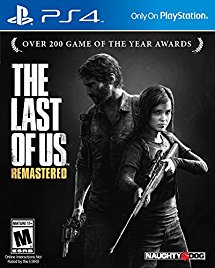
Video Game Review #146: The Last of Us Remastered

The Last of Us Remastered
PlayStation 4


I first played the Last of Us back in September of 2013. The game had already been out for several months, and I was well aware of all of the rave reviews it had been getting. Best PS3 game! Game of the year! Best game of all time! I knew from the hype and the reviews that it would be something I would like, and I fully intended to check it out someday. But I had plenty of other stuff to play, plus my mind was occupied with my upcoming wedding. I was in no hurry to get The Last of Us just yet.

As fate would have it, I started talking to a guy at work named Jeff. We hit it off bonding over our love of video games. He told me he would loan me his physical copy of the Last of Us if I would let him log into my PS3 account so he could download Grand Theft Auto V. We had literally just met, and I wasn't sure if I could trust this guy. Was that kind of exchange even legal? I justified it in my mind: nothing could stop people from trading physical copies of games, so why would an electronic copy be any different? Plus, I liked this guy and wanted to be his friend. My instincts told me that he was alright.

So I went ahead with the exchange. Not only did I get to play an awesome game in the Last of Us, I met a great friend in the process. Jeff and I had a ton of fun hangout sessions where we would play retro video games together and geek out over Youtube videos. We even contemplated creating our own channel together. He would also go on to write several guest reviews for this blog before his untimely death in June of 2018. In a way, the Last of Us was the game that brought the two of us together, even though it was only for a small handful of years. I can't help but think of him whenever the Last of Us comes to mind.


Run, girl. Run.


I knew very little about the game as I came into it. I only knew the basic gist: that you played as an older man and that it was your goal to escort a young girl through an apocalyptic wasteland. That’s it. So the beginning of the game surprised me a bit. For those who have never played the game before, The Last of Us starts out with you in control of a young girl. Her dad is the protagonist of the game, Joel. Naturally, I assumed that this girl was the one he would be escorting across the country. Nope. A cutscene shows the girl giving Joel a watch for his birthday before bedtime. Even though the scene is not very long, it does a terrific job establishing the two as characters as well as giving us a quick glance into their relationship. An unspecified amount of time later, your character wakes up in the middle of the night. Something weird is going on. There are news reports all over the TV of something catastrophic going on. A building explodes in the distance as you look out the window. You explore the house, looking for your dad, but he is nowhere to be seen. Just when it starts to seem like he has left, he comes rushing in from the outside and locks the door behind him. People are going crazy and turning into zombies. Technically I guess they aren’t really ZOMBIES as we know them; they are human bodies taken over by spores and fungi. But whatever. If it looks, moves, and acts like a zombie: it’s a freaking zombie to me. You get in the car with Joel and take off, but quickly things go awry.

Long story short, you and Joel end up on foot, running desperately to safety from the zombies. A military man with a machine gun appears and guns a couple of them down. You get a brief glimpse of hope that he is there to rescue you, but within seconds he gets orders over the comm to leave no survivors. Joel realizes what is going on and grabs his daughter and jumps and rolls down a hill as the man opens fire. At the bottom, Joel realizes that his daughter has been fatally wounded by the gunman. Joel sobs and cradles his dead daughter in his arms as the screen cuts to black. Welcome to the Last of Us!


I must say that this was one of the most effective openings I have ever seen in a video game. It made me cry the first time I played through it, and I am pretty sure it did the second time too. In the span of only about 15 or 20 minutes, you really get to know Joel and his daughter and appreciate the bond between them. To have that bond suddenly ripped apart, thrown to the ground, and spat on is a tremendous punch in the gut. I remember the first time I played this game, it was so intense that I contemplated taking a break and coming back to play later. I didn’t though - I kept going! And I am glad I did.

The game jumps forward 20 years in time. Instead of holding your hand and explaining everything that has happened in that 20 years, the game leaves you to discover that stuff on your own by using context clues. There are only a few major cities left across the country – all of them gated off and under oppressive military control. There is a small group of rebels out there that refer to themselves as Fireflies. Whether or not this has anything to do with the TV show Firefly and its Browncoat rebels, I have no idea. But I like to think it does.

You are in control of a very jaded and grimy looking Joel. I think he is now a smuggler or something. I forget the exact details, but an arms agreement between Joel and a criminal faction goes awry. Joel’s partner in crime, a woman named Tess, is attacked and nearly killed. Joel and Tess set off for revenge. Little do they know, this kicks off the main quest of the game. In order to get their weapons back, Joel and Tess are forced to escort a young girl named Ellie to the Fireflies. Ellie is special because she has been bitten by one of the infected, yet has not died or turned into one of them. This is something that no one has ever seen before. It is possible that Ellie contains a cure to the mass infection in her blood. Joel and Tess take Ellie under their wings and set off through the decaying, overgrown ruins of the city to the Firefly base.


I am not going to recap everything that happens in the game, because then I am going to be typing for a long time. But let’s just say that the journey takes a lot of unexpected twists and turns. People die, detours are taken, new people are met, new destinations set before our characters. Some are the characters you encounter are nice, some are shit heads. Expect a lot of hard hitting and emotional moments. If you have ever seen the Walking Dead, you will see a lot of familiar themes pop up here. I think the game handles them better than the show, though!

Gameplay takes place from a behind-the-back 3D perspective. Uncharted was the obvious thing that came to mind when I started playing this. Makes sense, as both games were made by Naughty Dog. Resident Evil 4 could be another inspiration. You use the left shoulder button to draw your weapon, the right shoulder button to shoot. You run, you crouch, you can climb up on things. You have your typical first aid kits and healing items. You can’t just pause to reload your gun or use these items however; these things must be done in real time. This makes things a bit more intense if you are almost out of health and need to heal in the middle of a fight. Stealth plays a major factor in this game too. Not only is ammo sparsely located and easy to run out of, but if you rush into combat your enemies can kill you VERY quickly. You will spend a lot of time crouched and sneaking around. While crouching, you enter a focus mode that lets you “see” where your enemies are based on the sounds they are making. If you want to get good at this game, you definitely have to take advantage of this feature, because the game’s perspective doesn’t really allow you to see your surrounding territory all that well.


Throughout the course of the game you are going to be fighting both human and infected opponents. You must adapt your strategy depending on who you are fighting. Humans are faster and can fire weapons at you, however they are physically weaker and can be brought down relatively easily. It is normally encouraged to use stealth tactics to sneak up on them and take them out one by one before you have a whole group of them flooding your location. There are several types of infected opponents, however, and some of them are blind. This may seem easy at first- if they can’t see you they should be easy to beat or sneak by, right? Not necessarily. The blind ones are extremely powerful and will one hit kill your character. The only way to kill them is to sneak up behind them and stab them with a shiv. If you don’t have a shiv, you have to unload your gun into it as many times as you can and hope for the best. Trying to fight it with your fists is a lost cause. The good news about these things is that they are relatively slow and easy to escape from. They’ll even forget about you after a while once you’ve lost them. The not-blind creatures are a different type of challenge. They can see you and will take off chasing after you at a moment’s notice. They are fast too! The good news about them is that they are weaker than their blind comrades. They can’t one hit kill you. You don’t need a shiv to stealth kill them. You can even take them down in regular hand to hand combat. These are the main enemy types you will encounter throughout the game, but the game does throw a few “massive” infecteds at you from time to time. These things act as boss characters, in a way. They are big, powerful, and take a LOT of ammo to bring down. I never look forward to fighting these things.

Graphically, the game is gorgeous. The character models are great. The landscapes are sensational. What makes the game stand out, in my opinion anyway, is the level of detail put into its environments. It doesn’t matter if you are just walking through a kid’s playroom that has nothing in it as far as items or anything you need to advance the plot. The room feels like a small child spent several years of his or her life there. Pink walls, toys on the bed and on the floor. Hanging decorations. A dresser with photographs and books on it. There are personal touches everywhere you look. You only pass through the room for about 15 seconds, and it is such a small part of the game. But the amount of detail put into the room is staggering. Now imagine the entire GAME being like that. A countless number of rooms, a countless numbers of streets, sewer tunnels, crumbling buildings, subway stations, stores, etc, all meticulously detailed and covered with small personal touches. The makers of the game created an entire living and breathing apocalyptic world that feels strikingly real. I can’t even imagine how much time was put into this game simply creating its environments. Just looking at this from a purely technical aspect, The Last of Us is a marvel.


Voice acting is sensational too. And the music… don’t even get me started. It is absolute perfection. As impressive as the game is technically, it is really the bond between Joel and Ellie that keeps things going. Watching them grow together over the course of their journey is magical. They start out at odds and quickly get on each others’ nerves. Ellie even steps on Joel’s toes when she brings up his dead daughter. But by the end of their several month journey, the bond they form is unbreakable and they would do anything for one another. Even though you are playing through events that take place 20 years after the death of Joel’s daughter, you can tell that her death has left a lasting impression on him and has shaped him into the man he is today. It is interesting to watch the tough, battle hardened Joel let his defenses down around Ellie. If you take the emotional prologue of the game away and jump right into “present day” times, I think that relationship suffers and is not nearly as interesting as it turned out to be.

So The Last of Us has outstanding graphics, great music and sound effects, interesting characters, terrifically designed environments, a great combat system, an intriguing plot, and it really makes you care for its characters. It is no wonder that so many people consider this one of the best, if not THE best game ever made. It is hard to find flaws here. I can name a few though. First one is in the stealth system. Not necessarily how with you control, but with certain NPCs like Ellie that you travel with. If you run and hide behind a wall just before an enemy turns around and sees you, great. But Ellie often tails right behind you. A lot of times she will clearly be in the sight of an enemy, but they do not see her for some reason. As long as YOU are hidden, your companions are virtually invisible to the enemies. Ellie could breakdance in the middle of an otherwise empty hallway and the guard would go walking right by her, completely oblivious to her existence. If the game is looking to be as realistic as possible, the enemies should see her when she is running around and all hell should break loose. But that never happens. I get why they have it set up like this. It would suck to run and hide and do everything perfectly yourself, but then Ellie keeps getting spotted and busting your cover. That would be irritating as hell, especially if it kept happening over and over again. It is just a small complaint I have.


Another one is in the glitches. There weren’t many, but there were some. My most memorable glitch is when I somehow managed to phase through the side of a building while trying to shiv an infected enemy in the neck. I don’t know what happened, but Joel pulled it too close to the wall to stab it and bam all of a sudden I am free falling 20 stories to my death. Another nitpick has to do with enemy AI. Once you know how to manipulate these creatures, the game is cake. For example: the first time I played this game, I remember taking part in a brutal, grueling fight against three “massive” infected enemies and a horde of small, fast ones. It took me soooo many tries to make it through that area. But it was all good. It was fun. It was a challenge. I felt rewarded when I finally made it through. What happened this time around? I chucked a grenade into the center of the enemy formation. The sound attracted other enemies, who came running. I threw another grenade into the fray. Then another. Then a few Molotov cocktails. When the smoke settled I had cleared out the entire area without even breaking the slightest of sweats. I felt a bit disappointed that it was so easy, to be honest with you. I wanted that giant, epic, difficult showdown I’d experienced the first time I played the game. And I didn't get it.

So no, the game is not perfect. That is not going to stop me from saying it is top notch, however. This is a REALLY good game. The first 15 minutes are enough to suck you in entirely, and the game never really lets up after that. While playing this game, I had other titles I was working on as well. I have been getting into this habit lately of playing through multiple video games at the same time. Not with The Last of Us, however. Once I started playing this game, my focus was entirely on this game and this game alone until I was done with it. Even going back to when I first played it 5 years ago, I turned around and started up a second play through almost immediately after beating the game the first time. I NEVER do that. That just shows you how good this game is.


While I don’t necessarily buy into the “greatest game ever” hype, I can see why people put it in that category. Personally, I would still say Final Fantasy VII takes that spot. It would be interesting to see where the Last of Us stacks up. Maybe I will have to do a list or a ranking of my favorite games ever sometime soon. Hmmm…..

Before I conclude, I would like to add that my copy of the game came with free downloadable content. There is an entire chapter, about two or three hours long, called The Last of Us: Left Behind. The game switches back and forth between two different time periods: during the main game (while Ellie is trying to save an unconscious Joel from David's men) and before the start of the main game. The "present day" timeline is pretty straightforward. Ellie sneaks around the abandoned lake town and gathers supplies and fights enemies while trying to get Joel somewhere safe so she can nurse him back to health. This effectively fills in one of the main game's blank spots, from the point where Joel is knocked unconscious to the point he wakes up.

The past timeline is the one I found infinitely more interesting. It takes place three weeks before the events of the main game. Ellie is living a normal life in one of the military towns. Normal is relative, I guess. She is being trained to be a child soldier, after all. When one of Ellie's friends is about to leave on a secret Firefly mission, she invites Ellie out with her for a night on the town. The two friends sneak out of camp and to an abandoned shopping mall. They explore and marvel over all the relics from the past. Ellie has lived in a military camp her whole life and it is like walking into a different universe for her. You explore and check things out like a video game arcade, a carousel, and a Halloween costume store. Being The Last of Us, of course, things don't stay happy and chipper for long. The infected start to pour into the mall, making your return to camp a lot more complicated.


I don't want to spoil too much, but... if you were paying attention to some of the things Ellie was telling Joel in the first game, you will see those things happen here. You find out how she got bit. You find out what happens with her friend. Suffice it to say, some more manly tears were shed during my playthrough of this DLC.

All in all, I thought the DLC was excellent. I am glad it came with my version of the game, because honestly I probably would have never played it if I had to pay extra for it. But it would have been money well spent. It gives you a lot of much needed backstory about Ellie, in addition to being pretty action packed and fun too. The next time I play the Last of Us, I will have to play the main quest, stop at the part where Joel blacks out, play the DLC, then finish the rest of the main game.

If you have read this far it really should come as no surprise that I thought The Last of Us was an excellent game. I liked it the first time when I played it on the PS3. Playing it in HD on the PS4, plus with the free DLC, made the game even more fun. This is definitely a classic title, and I would recommend it to absolutely anyone and everyone who has not already played it. You are doing yourself a disservice by not checking it out.


Overall:
A+


If you liked my review of The Last of Us, please check out the following reviews:


For a complete index of all my past posts and game reviews, click